Introduction
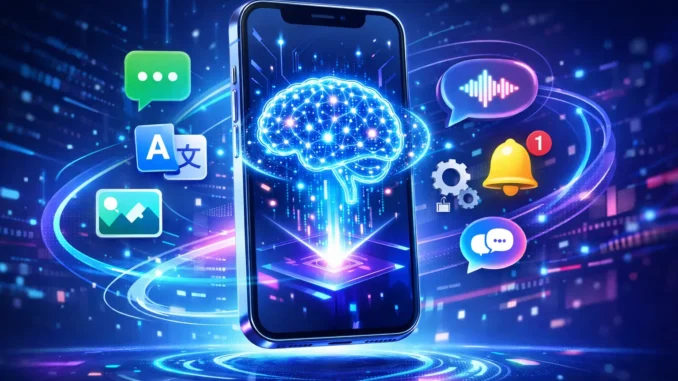
The smartphone industry is entering a new era where artificial intelligence is no longer a feature; it is the foundation of the user experience. In recent years, Apple has begun reshaping the iPhone ecosystem through Apple Intelligence, a powerful AI framework integrated across iPhone, iPad, and Mac devices.
With the arrival of iOS 26, Apple is pushing this transformation further, introducing smarter automation, advanced communication tools, and privacy-focused AI capabilities that redefine how users interact with their devices.
This shift represents Apple’s most ambitious step yet toward creating a truly intelligent smartphone experience.
The Rise of Apple Intelligence
At the center of Apple’s strategy is Apple Intelligence, a system designed to combine advanced machine learning with deep integration across Apple’s ecosystem. The technology helps users write, communicate, organize information, and automate tasks directly on their devices.
Unlike many AI platforms that rely heavily on cloud processing, Apple focuses on on-device AI to enhance privacy and security. Sensitive data can be processed directly on the device or through Apple’s secure Private Cloud Compute architecture when more computing power is needed.
This hybrid approach allows Apple to deliver intelligent features while maintaining the company’s long-standing commitment to user privacy.
iOS 26: The Biggest iPhone Software Evolution
The launch of iOS 26 represents one of the most significant updates to Apple’s mobile operating system in years. The update introduces a redesigned interface along with intelligent features integrated across core apps like Messages, Photos, and FaceTime.
Key improvements include:
- AI-Powered Communication
One of the most impressive additions is Live Translation, which automatically translates conversations in Messages, FaceTime, and phone calls in real time. This feature removes language barriers and enables seamless communication between users worldwide.
- Intelligent Writing Tools
Apple Intelligence provides powerful writing assistance across the system. Users can rewrite text, change tone, summarize messages, or generate content instantly—making everyday communication faster and more professional.
- Smarter Photos and Memories
AI can now analyze images and videos to automatically create personalized highlight movies from a simple text description. The system selects photos, organizes them into chapters, and produces a complete story-like video.
- Personalized Notifications and Focus
Apple Intelligence learns user habits to prioritize important notifications and reduce distractions, helping people stay focused throughout the day.
iPhone Hardware Built for AI
The latest iPhone models—including the iPhone 16 lineup– were designed specifically to support Apple Intelligence features. These devices integrate advanced chips, such as the A18 processor, and improved neural engines to accelerate AI processing.
New capabilities include:
- Real-time visual intelligence using the camera
- AI-powered photo and video editing
- Personalized emoji and content generation
- Advanced voice commands and automation
These innovations transform the iPhone from a traditional smartphone into a powerful AI assistant that understands context and user behavior.
Apple’s Expanding AI Strategy
Apple’s AI ambitions extend beyond smartphones. The company is reportedly preparing additional AI-driven devices and services, including new hardware products and potentially more affordable iPhone models, to reach a broader audience.
Future releases are also expected to enhance Siri with deeper contextual awareness and more advanced conversational capabilities powered by Apple Intelligence.
Why Apple’s Approach to AI Is Different
While many technology companies focus on large cloud-based AI models, Apple emphasizes privacy, efficiency, and integration.
Key principles behind Apple’s AI strategy include:
- On-device processing for better security
- Private Cloud Compute for complex tasks
- Deep ecosystem integration across Apple devices
- User-centric design that simplifies everyday tasks
This approach allows Apple to deliver powerful AI features without compromising user data.
The Future of the iPhone
Artificial intelligence is rapidly becoming the defining feature of modern smartphones. With Apple Intelligence and iOS 26, Apple is positioning the iPhone as an AI-first device, capable of understanding user intent, automating tasks, and enhancing productivity.
As Apple continues developing smarter hardware and software, the iPhone is likely to evolve from a communication device into a fully intelligent digital assistant that anticipates user needs and simplifies daily life.
Conclusion
Apple’s integration of artificial intelligence into the iPhone marks a turning point for the entire smartphone industry. Through Apple Intelligence and the powerful capabilities introduced in iOS 26, Apple is redefining how users interact with their devices.
The future of the iPhone is not just faster processors or better cameras; it is intelligent software that learns, adapts, and assists users in ways once considered science fiction.
For Apple and its billions of users worldwide, the AI revolution has only just begun.