Introduction
Artificial Intelligence has rapidly moved from experimental technology to the backbone of modern innovation. In 2026, the race to dominate AI has intensified as technology giants and startups compete to develop smarter models, autonomous systems, and powerful AI infrastructure.
From next-generation AI chips to agent-based systems capable of complex reasoning, the current wave of innovation signals a fundamental shift in how humans interact with technology. Industry analysts now believe the world may be on the verge of one of the most significant technological breakthroughs in decades.
The Global AI Arms Race
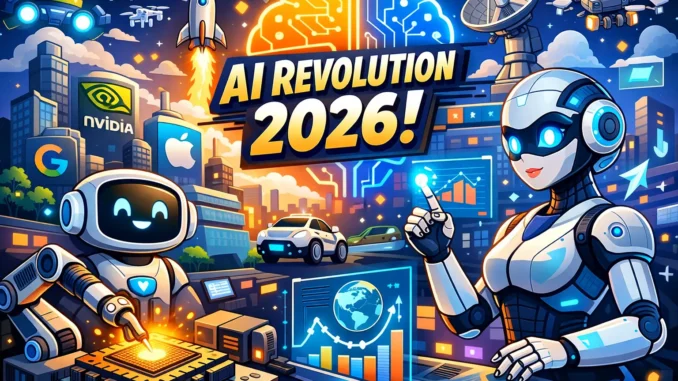
The technology sector has entered a fierce competition to lead the AI revolution. Companies including Google, Microsoft, OpenAI, Apple, and Nvidia are investing billions of dollars into developing more advanced models, cloud infrastructure, and AI-powered products.
Recent reports indicate that major corporations are dramatically increasing AI budgets, with some companies planning spending increases exceeding 50% in 2026 to maintain a competitive advantage
At the same time, governments around the world are positioning AI as a strategic priority. Countries such as China have announced plans to integrate AI into nearly 90% of their economy by 2030, emphasizing the technology’s geopolitical importance
This global competition has triggered unprecedented investment in:
- AI research laboratories
- High-performance computing infrastructure
- Advanced semiconductor manufacturing
- AI software ecosystems
NVIDIA and the Next Generation of AI Hardware
One of the most anticipated moments in the AI industry is the upcoming announcement of new AI technologies from Nvidia at its global conference. The company is expected to unveil powerful hardware designed to accelerate machine learning workloads and large-scale AI models.
These next-generation processors will likely power:
- Autonomous systems
- Large language models
- Advanced robotics
- Real-time AI applications
Because AI models require enormous computing power, breakthroughs in AI chips and GPUs are just as important as improvements in algorithms.
The Rise of AI Agents and Autonomous Systems
Another major trend shaping 2026 is the emergence of AI agent systems capable of performing complex tasks with minimal human supervision.
Unlike traditional chatbots, these intelligent agents can:
- Plan multi-step workflows
- Analyze large data sets
- Make decisions autonomously
- Execute digital tasks across applications
New platforms are already enabling developers to build teams of AI agents that collaborate to solve problems, write code, manage operations, and conduct research.
This shift toward autonomous AI could fundamentally change how businesses operate.
AI Is Transforming Entire Industries
Artificial Intelligence is no longer limited to software applications. It is rapidly transforming nearly every major industry:
Healthcare
AI-driven diagnostics are improving medical imaging analysis and early disease detection.
Finance
Banks are deploying AI to detect fraud, automate risk analysis, and personalize financial services.
Manufacturing
Smart factories use AI-powered robotics to optimize production and reduce operational costs.
Consumer Technology
Smart assistants, AI-powered smartphones, and intelligent home devices are becoming more capable every year.
Research shows that AI-generated summaries and search results are also appearing far more frequently across the web, fundamentally reshaping how people access information online.
The Future of Work in an AI-Driven World
As AI becomes more powerful, businesses and policymakers are increasingly concerned about its impact on employment. Technology leaders and investors are already debating how automation may change the global workforce.
Many experts believe AI will:
- Replace repetitive jobs
- Create entirely new career fields
- Increase productivity across industries
However, adapting to this new era will require major investments in education and digital skills training.
What Comes Next: The AI Breakthrough Era
Some analysts predict that a major AI breakthrough could occur in the first half of 2026, potentially unlocking new capabilities that reshape the technology landscape.
The next generation of AI systems is expected to feature:
- Advanced reasoning capabilities
- Multimodal understanding (text, video, audio)
- Autonomous decision-making
- More efficient computing architectures
If these advancements materialize, AI could become one of the most transformative technologies since the internet.
Conclusion
Artificial Intelligence is no longer just a technological trend; it is the driving force behind the next digital revolution.
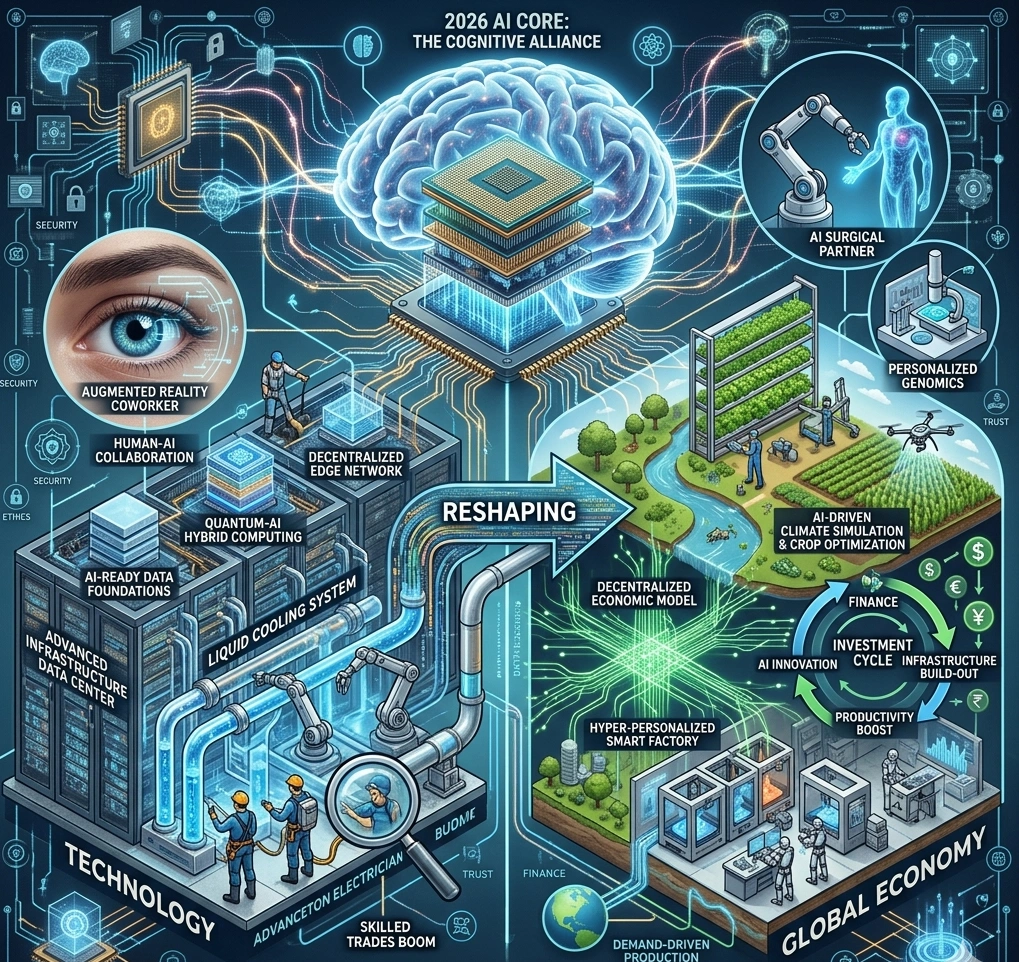
With unprecedented investment, rapid research breakthroughs, and intense global competition, AI is poised to redefine industries, reshape economies, and transform everyday life.
The next few years will determine which companies and nations lead the AI-powered future.