Apple Intelligence, Siri 2.0, and the High-Stakes Battle for AI Leadership
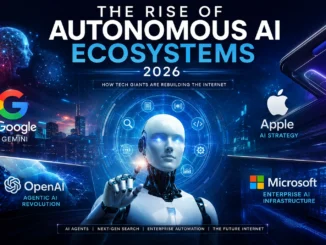
Apple is entering what may become the most critical artificial intelligence transition in its history. After years of dominating consumer technology through hardware innovation and ecosystem control, the company now faces mounting pressure to prove it can compete in the generative AI era against rivals like OpenAI, Google, and Microsoft.
The center of this storm is Apple’s delayed AI strategy, especially the long-promised evolution of Siri. What was once marketed as the future of “Apple Intelligence” has now become one of the tech industry’s most closely watched comeback attempts. Recent reports suggest Apple is preparing a dramatic AI overhaul for WWDC 2026, including a rebuilt Siri experience, deeper AI integrations across iOS 27, and possibly even a standalone chatbot-style assistant focused heavily on privacy.
Why Apple’s AI Rollout Became Controversial
When Apple introduced “Apple Intelligence” during WWDC 2024, expectations exploded across the industry. The company promised a more personalized Siri capable of understanding on-screen context, performing cross-app actions, and delivering AI experiences directly on-device.
But many of those headline features never arrived on schedule.
Now, the delays are costing Apple more than its reputation. The company recently agreed to a massive $250 million settlement tied to allegations that it overpromised AI-powered Siri features that were unavailable at launch.
Industry analysts increasingly view WWDC 2026 as Apple’s defining AI moment, a make-or-break event that could determine whether Apple becomes a genuine AI leader or remains years behind competitors.
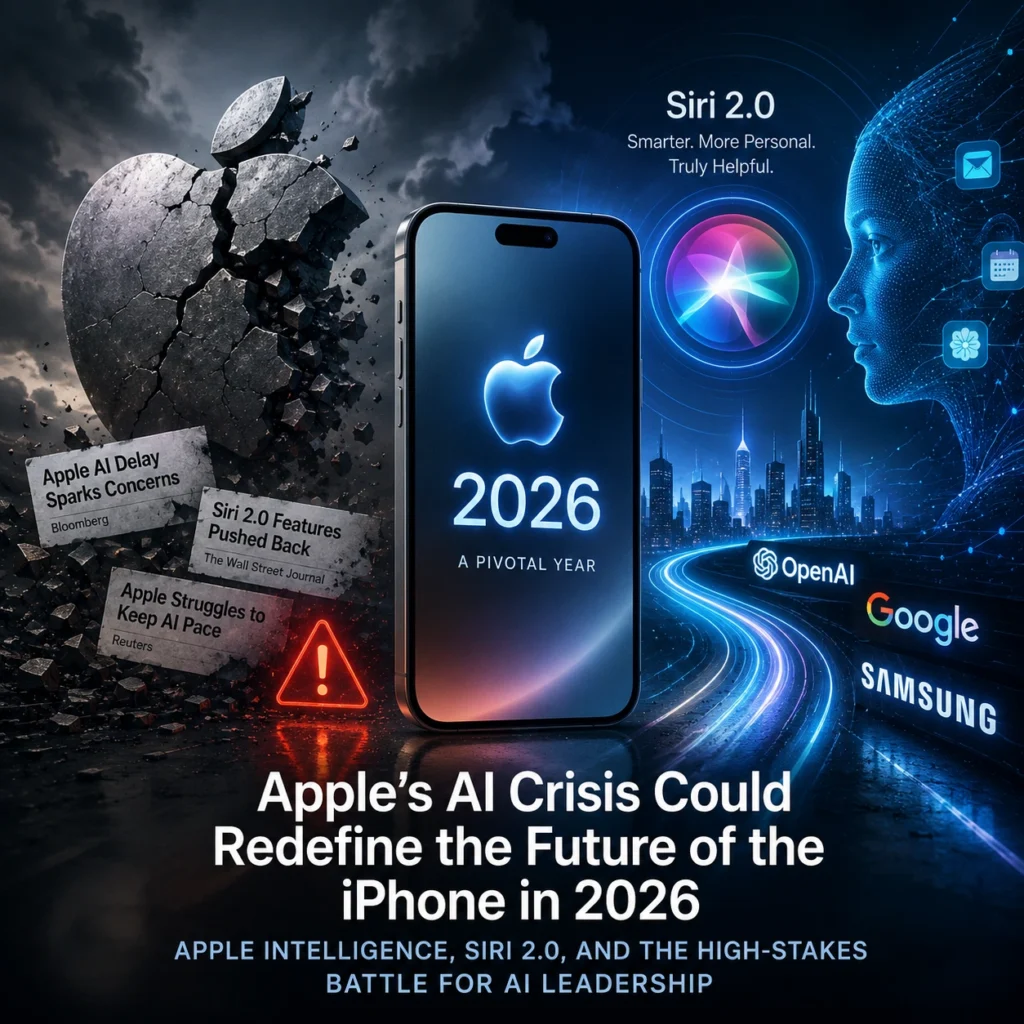
Siri 2.0: Apple’s Biggest AI Bet Yet
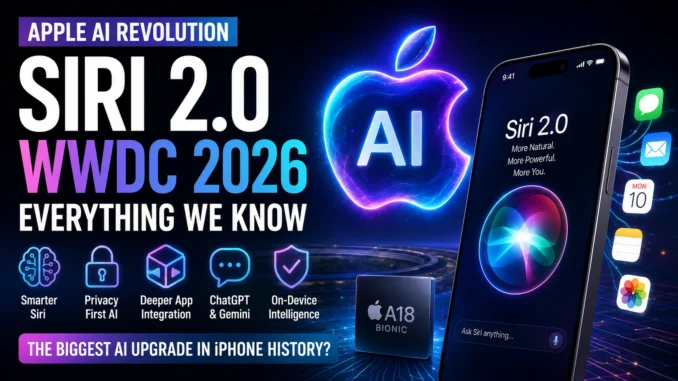
According to multiple reports, Apple is developing a dramatically upgraded version of Siri that behaves less like a traditional voice assistant and more like a modern AI agent.
Expected capabilities include:
- Deep understanding of emails, messages, notes, and calendar events
- Multi-step task execution across apps
- Conversational memory and contextual awareness
- More natural language interactions
- Integration with third-party AI models like Gemini and ChatGPT
- Privacy-first AI processing on Apple devices
The next-generation assistant is rumored to launch alongside iOS 27 and may eventually evolve into a standalone AI application similar to ChatGPT.
One particularly notable feature reportedly under development is automatic chat deletion, allowing users to erase AI conversation history after 30 days, one year, or keep it permanently. This move reinforces Apple’s strategy of positioning privacy as its core AI differentiator.
Apple’s New AI Strategy: Privacy Over Hype
Unlike competitors racing to release increasingly powerful cloud-based AI systems, Apple appears to be pursuing a more cautious path centered around on-device intelligence and user privacy.
That strategy may finally become an advantage.
As public concerns grow around AI surveillance, data harvesting, and chatbot memory retention, Apple’s controlled ecosystem could become one of the safest consumer AI platforms available.
However, this approach also exposes a major weakness: Apple’s AI development has moved significantly more slowly than rivals. Reports suggest the company may now rely partially on external AI models, including Google Gemini, to accelerate progress.
The irony is striking: the company famous for building everything internally may need competitors’ AI systems to remain competitive.
The Growing Tension Between Apple and OpenAI
The AI race has also introduced unexpected tensions between Apple and OpenAI.
Recent reports indicate OpenAI is exploring legal options over frustrations tied to Apple’s ChatGPT integration strategy. Sources claim OpenAI expected deeper system-level integration inside iOS and Siri, while Apple reportedly remained cautious due to privacy concerns and ecosystem control.
At the same time, Apple is reportedly testing multiple AI providers instead of committing exclusively to one company. This could eventually allow iPhone users to choose between models from OpenAI, Google Gemini, Anthropic Claude, and Apple’s own systems.
If true, the iPhone may evolve into the world’s largest AI marketplace.
Why WWDC 2026 Could Change Everything
For years, Apple succeeded by entering markets late and refining the experience better than everyone else.
The company is now attempting the same strategy with generative AI.
WWDC 2026 is expected to reveal:
- Siri’s largest redesign since launch
- Expanded Apple Intelligence capabilities
- AI-powered iOS 27 features
- Smarter app automation
- Cross-device contextual AI
- New developer AI tools
- Broader integration with third-party AI systems
The event may also determine whether Apple can restore investor and consumer confidence after months of criticism surrounding delayed AI features.
Finaly
Apple’s AI story is no longer just about adding chatbot features to the iPhone.
It is about redefining how artificial intelligence works inside consumer devices, balancing intelligence, privacy, trust, and ecosystem control at a scale no competitor currently matches.
The next version of Siri could either become the most important product transformation in Apple’s modern history or serve as evidence that the company moved too slowly during the biggest technology shift since smartphones themselves.
Either way, 2026 may become the year that defines Apple’s AI future.