Android smartphones are entering a new era. The latest Android updates, especially Android 16 and the emerging AI ecosystem around it, are transforming smartphones from simple tools into intelligent digital assistants. Powered by advanced artificial intelligence models, smarter multitasking, and stronger security systems, Android is evolving faster than ever.
Google’s strategy is clear: embed AI deeply into Android so that devices can anticipate user needs, automate tasks, and improve everyday experiences. From AI-generated writing tools to enhanced privacy protections and advanced multitasking, the newest Android features are redefining what smartphones can do.
In this article, we explore the most important Android innovations of 2026, why they matter, and how they will shape the future of mobile technology.
- AI-Powered Android: Gemini Integration Changes Everything
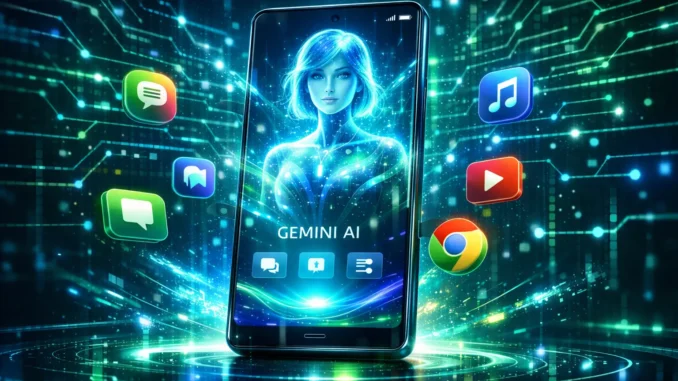
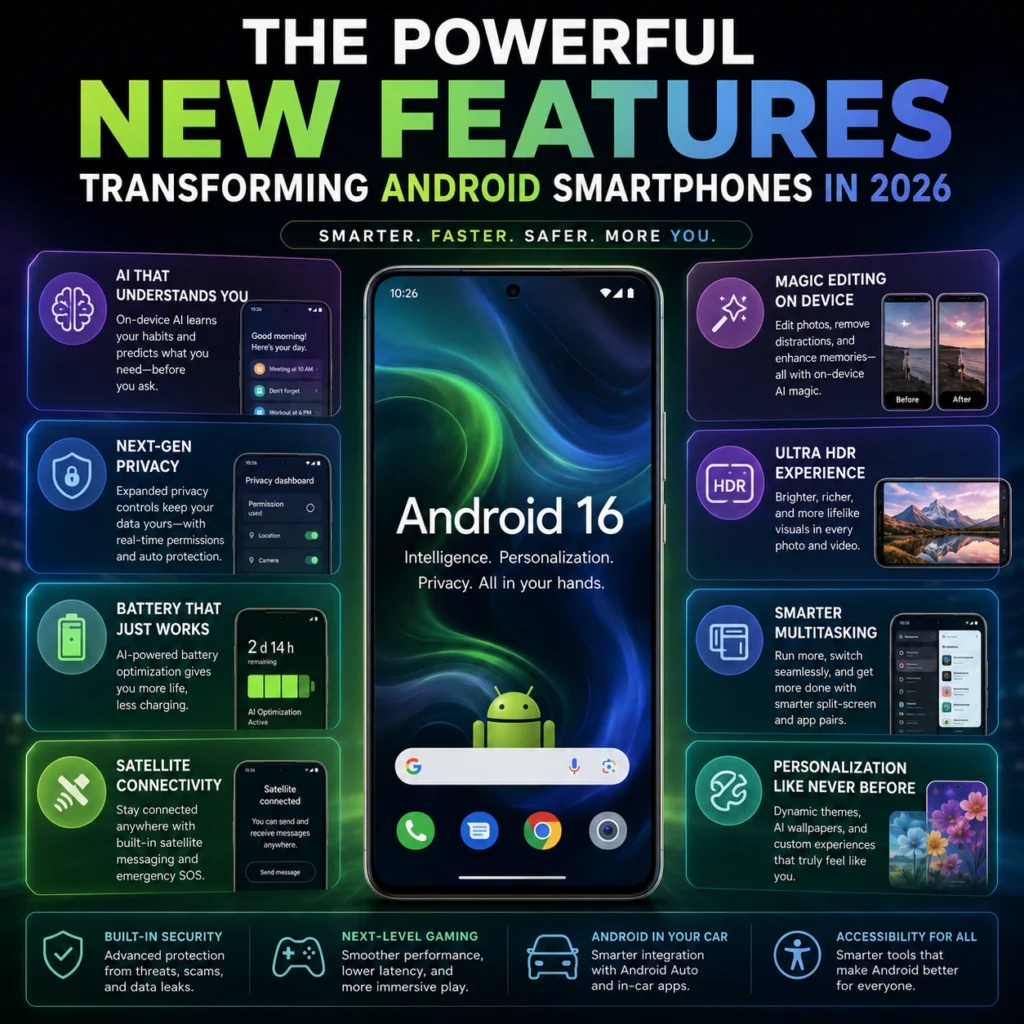
Artificial intelligence is now at the center of Android’s evolution. Google is integrating Gemini AI models directly into Android devices, allowing smartphones to process intelligent tasks locally without sending data to the cloud.
These AI features enable smartphones to:
- Generate and edit text directly from the keyboard
- Summarize web pages and messages
- Suggest contextual replies and actions
- Create images or creative content
- Automate complex tasks across apps
Because some AI processing happens on-device, responses are faster, and user data remains more private.
AI is becoming the “brain” of Android devices, turning smartphones into proactive digital assistants rather than passive tools.
- Smarter Notifications and Live Updates
Notifications are one of the most frequently used smartphone features, and Android is making them significantly smarter.
Android’s latest update introduces automatic notification grouping and live updates, allowing users to track real-time activities such as deliveries, ride-sharing, or sports scores directly from the notification panel.
Key improvements include:
- Automatic grouping of related alerts
- Live activity tracking
- Cleaner notification interface
- Reduced notification clutter
These enhancements improve productivity by ensuring users get important updates without constantly opening apps.
- Desktop-Style Multitasking on Mobile
One of the most exciting Android upgrades is desktop-style multitasking, particularly useful on foldable devices and tablets.
Users can now:
- Open multiple app windows
- Resize and move applications freely
- Group apps for productivity
- Use a taskbar similar to desktop operating systems
This change transforms Android devices into true productivity tools, allowing smartphones and tablets to handle tasks traditionally reserved for laptops.
Android is moving closer to becoming a full mobile computing platform.
- Advanced Security and Anti-Theft Protection
Security has become a top priority for Android. New features in recent Android updates include stronger biometric protections and improved anti-theft capabilities.
One important addition is Identity Check, which requires biometric authentication when accessing sensitive data outside trusted locations.
Additional security improvements include:
- Advanced theft protection systems
- Stronger account recovery tools
- Biometric verification for sensitive actions
- Improved device lock and recovery mechanisms
These updates help protect users from both physical phone theft and digital account breaches.
- Accessibility Innovations for Inclusive Technology
Android continues to lead in accessibility innovation. One standout feature allows smartphones to act as microphones for hearing aids, enabling clearer voice communication in noisy environments.
Other accessibility enhancements include:
- Improved support for assistive technologies
- Better voice recognition tools
- More customizable accessibility settings
These updates demonstrate Android’s commitment to making technology accessible for everyone.
- AI Features Expanding Across Google Apps
The Android ecosystem is expanding AI integration beyond the operating system itself.
For example, new updates to Google services include AI-powered navigation tools that allow users to ask complex questions directly in mapping apps, providing personalized travel recommendations and route planning.
AI is now deeply embedded across Google services such as:
- Google Maps
- Chrome
- Gmail
- Google Docs
- Android system apps
This ecosystem-wide integration makes Android devices smarter and more useful in everyday life.
Why Android’s AI Strategy Matters
Android’s latest updates signal a major shift in smartphone design.
Instead of focusing only on hardware upgrades, Google is emphasizing software intelligence. AI is becoming the core feature that differentiates modern smartphones.
Key trends shaping Android’s future include:
- AI assistants are replacing traditional search
- smarter automation across apps
- on-device AI processing for privacy
- deeper integration between Google services
The result is a smartphone experience that feels more personalized, predictive, and powerful.
The Future of Android Smartphones
Looking ahead, Android will likely continue evolving into a fully AI-driven mobile platform.
Upcoming Android versions are expected to expand:
- AI agents that perform tasks automatically
- predictive automation across apps
- more advanced voice interfaces
- deeper integration with wearable devices and smart homes
As AI models become more powerful, Android smartphones will act less like phones and more like intelligent digital companions.
Conclusion
Android’s latest features represent a turning point in smartphone innovation. With AI integration, smarter notifications, enhanced security, and desktop-level multitasking, Android is evolving into one of the most powerful mobile platforms ever created.
The combination of artificial intelligence, productivity tools, and advanced security systems ensures Android remains at the forefront of mobile technology.
For users, this means smarter devices, faster workflows, and a more personalized digital experience.
And for the tech industry, it signals a future where AI-powered smartphones become the center of our digital lives.