Artificial intelligence is entering a new phase in 2026 that goes far beyond chatbots and simple automation. The latest technological shift is the rise of AI agents, autonomous systems capable of planning, reasoning, and completing complex tasks without constant human guidance.
Experts believe this evolution represents the next major leap in artificial intelligence. Instead of responding to prompts, AI systems are increasingly capable of executing entire workflows on behalf of users, marking a transition from “AI that answers questions” to “AI that gets work done.”
This transformation is reshaping industries ranging from finance and healthcare to marketing and software development.
What Are AI Agents?
AI agents are intelligent software systems designed to perform tasks independently by combining data analysis, reasoning, and decision-making capabilities.
Unlike traditional AI assistants, which simply generate responses, AI agents can:
- Analyze complex data
- Break goals into smaller tasks
- Execute actions automatically
- Adjust strategies in real time
For example, an AI marketing agent could analyze customer behavior, create multiple advertising campaigns, test them automatically, and optimize the budget, all with minimal human involvement.
Why AI Agents Are the Biggest Tech Trend of 2026
Several technological developments have accelerated the rise of AI agents:
- Advanced Generative AI Models
Large language models now understand natural language instructions and complex objectives. This allows AI agents to interpret goals and execute multi-step tasks.
- Integration With Business Systems
Modern AI tools integrate directly with software platforms like CRM systems, analytics tools, and cloud services, enabling automated workflows across organizations.
- Powerful AI Infrastructure
Technology companies are investing heavily in specialized AI hardware and data centers designed to run autonomous AI systems at scale.
- Massive Market Growth
The global AI market is expected to expand dramatically over the next decade, driven largely by automation and intelligent agents capable of replacing repetitive work.
Real-World Applications of AI Agents
AI agents are already being used across multiple industries:
Digital Marketing
AI systems can automatically generate content, manage advertising campaigns, and analyze performance metrics.
Software Development
AI coding agents can review code, detect bugs, and suggest improvements based on repository history and development patterns.
Customer Support
AI service agents can handle thousands of support requests simultaneously, offering instant responses and resolving common issues.
Logistics and Supply Chains
Autonomous AI systems can monitor shipments, predict delays, and optimize delivery routes in real time.
The Shift From AI Tools to AI Workers
Technology analysts describe the current moment as the transition from AI assistants to AI coworkers.
Instead of helping users perform individual tasks, AI agents can manage entire processes from planning to execution while continuously learning from feedback and new data.
In many organizations, this shift is expected to dramatically improve productivity and reduce operational costs.
Challenges and Risks of Autonomous AI
Despite its potential, AI agents also introduce new challenges.
Ethical and Safety Concerns
Autonomous systems must operate under strict guidelines to prevent misuse and ensure responsible AI behavior.
Data Privacy
AI agents often require access to large datasets, raising concerns about how sensitive information is handled.
Reliability
Organizations must ensure that AI systems remain accurate and trustworthy when making automated decisions.
As AI adoption accelerates, governments and technology companies are working to create governance frameworks that promote responsible AI development.
The Future of AI Agents
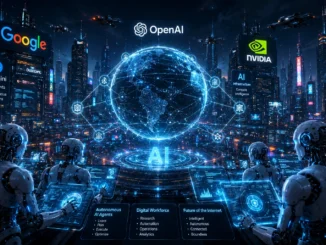
The next stage of artificial intelligence will likely involve networks of specialized AI agents collaborating together.
Instead of a single AI system handling everything, multiple agents may work as a coordinated digital workforce, each focusing on a specific task such as research, communication, analysis, or execution.
This vision could redefine how businesses operate and how individuals interact with technology.
Conclusion
The rise of AI agents represents one of the most significant technological breakthroughs of the decade. By enabling autonomous decision-making and complex task automation, these systems are transforming how organizations operate and how people work with machines.
As artificial intelligence continues to evolve, AI agents may soon become an essential part of everyday digital life, functioning not just as tools but as intelligent collaborators.