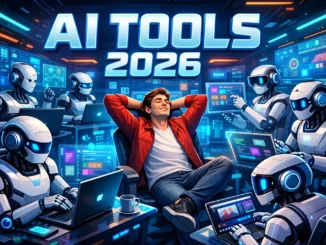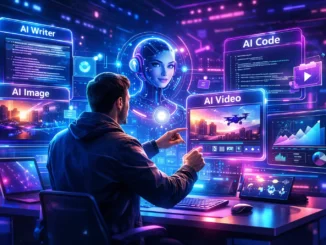
Artificial Intelligence is no longer just a tool; it is rapidly becoming an independent decision-maker. In 2026, the biggest shift in AI is not just smarter chatbots or better image generators, but the emergence of Agentic AI systems that can plan, act, and execute complex tasks with minimal human input.
From enterprise automation to self-improving models, AI is entering a new phase that could redefine productivity, jobs, and the global economy. Artificial Intelligence is no longer just a tool; it is rapidly becoming an independent decision-maker. In 2026, the biggest shift in AI is not just smarter chatbots or better image generators, but the emergence of Agentic AI systems that can plan, act, and execute complex tasks with minimal human input.
From enterprise automation to self-improving models, AI is entering a new phase that could redefine productivity, jobs, and the global economy.
🔥 What Is Agentic AI (And Why It Matters)
Agentic AI refers to systems that go beyond simple responses and instead:
- Break down goals into actionable steps
- Execute multi-step workflows autonomously
- Use external tools (APIs, databases, software)
- Adapt strategies in real-time
Unlike traditional AI models, these systems don’t wait for instructions; they take initiative.
This marks a major paradigm shift from passive AI assistants to active digital agents embedded in real-world operations.
⚡ Major AI Breakthroughs in 2026
- Autonomous AI Agents Are Replacing Repetitive Work
Companies are now deploying AI agents that can:
- Manage customer support end-to-end
- Automate Excel, reports, and presentations
- Run marketing campaigns
- Handle software debugging
This transition is driving massive efficiency but also raising concerns about job displacement. Reports indicate tens of thousands of roles are already being impacted by AI-driven automation.
- Massive Context Windows (AI Memory Explosion)
New models like GPT-5.4 can process up to 1 million tokens of context, allowing them to:
- Handle long documents
- Maintain memory across workflows
- Execute complex, multi-step reasoning
This unlocks entirely new use cases like AI project managers and research assistants.
- Self-Learning AI Systems
One of the most fascinating breakthroughs comes from research where AI can:
- Detect gaps in its own knowledge
- Learn new information dynamically
- Improve performance without retraining
This means AI is evolving toward continuous self-improvement, a key step toward more advanced intelligence.
- AI + Hardware Revolution
AI is no longer just software. New chips and supercomputing platforms are enabling:
- Faster model training
- Lower costs
- Scalable AI deployment across industries
Tech giants are investing billions in AI infrastructure, making it the backbone of future innovation.
- AI Is Becoming the Operating Layer of Business
Companies are no longer experimenting with AI; they are building entire systems around it.
Modern enterprises now use AI to:
- Monitor operations
- Make decisions
- Optimize workflows automatically
Experts describe this as AI becoming the “operating system” of organizations.
🌍 Real-World Impact: Industries Being Transformed
💼 Business & Marketing
AI agents now run campaigns, analyze data, and optimize performance without human intervention.
🏥 Healthcare
AI is accelerating diagnostics, drug discovery, and personalized treatment plans.
💻 Software Development
AI can now write, debug, and deploy code—reducing development time dramatically.
🌦️ Climate & Science
AI-powered systems are improving weather prediction and scientific discovery accuracy.
- ⚠️ Challenges & Risks of Advanced AI
Despite its benefits, AI introduces serious concerns:
- Job displacement due to automation
- Deepfakes and misinformation
- Cybersecurity threats using AI-generated attacks
- Ethical and regulatory gaps
Experts warn that AI capabilities are advancing faster than governance frameworks.
🔮 The Future: What Happens Next?
The next phase of AI will likely include:
- Fully autonomous digital employees
- AI agents collaborating with humans
- Hyper-personalized digital experiences
- Integration into every business function
By 2027–2030, AI could handle tasks that currently take humans days or even weeks.
🧠 Final Thoughts
2026 is shaping up to be the year AI transitions from assistant → operator → decision-maker.
The rise of Agentic AI signals something bigger than just technological progress; it represents a fundamental shift in how work gets done.
Businesses that adapt early will gain a massive competitive advantage. Those who don’t risk being left behind in an AI-driven world.